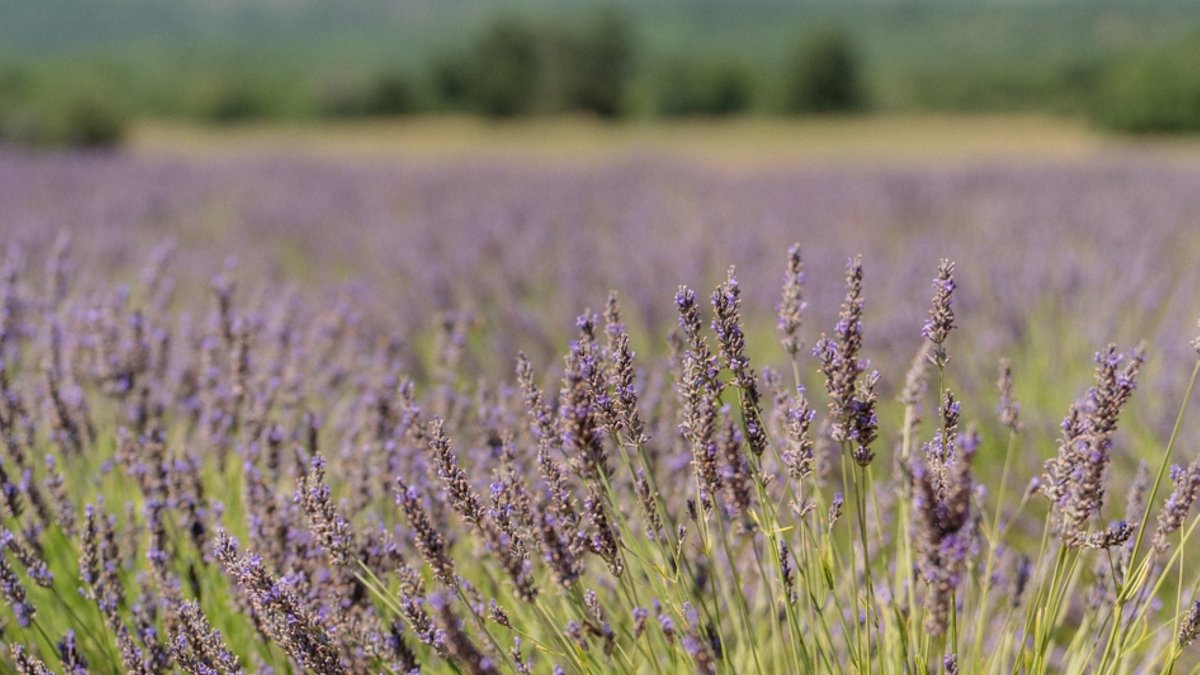
Under the July sun, the lavender and lavandin harvest is in full swing across Provence’s plateau. Each variety showcases decades of agricultural progress and olfactory research. Once processed, the flowers produce essential oils collected by SCA3P, a cooperative responsible for over a quarter of global lavandin production.
Located near Apt in the Vaucluse region, SCA3P brings together around 200 producers and 50 distilleries. One such distillery is owned by Jérôme Boenle, who processes both his own crops and those of fellow members. The supply chain receives support from dsm-firmenich, a long-standing partner in cultivating fragrant plants in Provence.
The Many Faces of Lavender
Lavender includes several species, each with unique cultivation methods and scents. True lavender, or English lavender, grows naturally on the Plateau d’Albion above 800 meters. Grown from seed, it develops a distinct aromatic profile with camphoraceous and mushroom-like notes. Its low yield—around 20kg of essential oil per hectare—makes it the most expensive variety.
Clonal lavenders, selected for their aromatic qualities or hardiness, are propagated by cuttings. Maillette, the most widely cultivated clone, and the newer Diva Essence are prime examples. Developed with dsm-firmenich, Diva Essence offers a softer, more floral character with pronounced linalool notes reminiscent of bergamot. It doubles the yield of true lavender, producing around 40kg of essential oil per hectare.
In 2023, dsm-firmenich perfumer Amandine Clerc-Marie featured Diva Essence in Burberry Goddess, blending it with three vanilla extracts. The fragrance was later awarded by the Fragrance Foundation France.
Read Also: Oman’s frankincense faces extinction threat
The Plateau d’Albion has inspired other creations as well. Master Perfumer Fabrice Pellegrin drew inspiration from Jérôme Boenle’s fields for Bucoliques de Provence by L’Artisan Parfumeur, combining two lavender varieties.
Lavandin: The High-Yield Hybrid
Lavandin, a natural hybrid of true lavender and spike lavender, dominates major production areas like the Plateau de Valensole, where it accounts for 90% to 95% of cultivated fields. Sterile by nature, it requires human intervention for propagation.
Lavandin’s key advantage is its productivity. While true lavender yields around 20kg of essential oil per hectare, lavandin can produce between 150 and 200kg. Varieties like Grosso and Super offer distinct olfactory signatures, with harvesting techniques further influencing the final scent.
For example, “spy” lavandin, harvested with a machine that separates flower spikes from stems, yields a more floral essential oil. Dsm-firmenich has developed a Firgood® lavandin extract, designed for fine fragrance applications with its floral, less camphoraceous profile.
Harvesting methods differ between lavender and lavandin. Fine lavender is cut with stems intact to maintain quality, while lavandin is chopped in the field to reduce transport volumes and speed up harvesting. These practices directly affect the olfactory profile of the resulting extracts.
Read Also: Aquatonale marine biotech lab becomes Belle en Mer
Climate Change and the Future of Harvests
Both lavender and lavandin are perennial, but their lifespan depends on climatic conditions. A field typically remains productive for around six years, though this can vary based on disease pressure, weather, and planting year. Climate change is altering this balance.
During a recent visit by dsm-firmenich, harvesting, traditionally starting in mid-July, was nearing completion, illustrating how rising temperatures are advancing the season. Heatwaves continue to impact yields, prompting producers to adapt their cultivation practices.
Provence’s iconic lavender fields, while resilient, face new challenges as the climate evolves. Producers and perfumers are working to maintain the delicate balance between tradition and innovation in this fragrant industry.
The cooperative’s efforts, combined with partnerships like dsm-firmenich, ensure that lavender and lavandin remain central to Provence’s identity. As climatic pressures mount, such collaborations become increasingly vital for sustaining this timeless craft.
Innovations in cultivation and extraction, alongside adaptive practices, are key to preserving the region’s aromatic heritage. The future of Provence’s lavender fields depends on these ongoing efforts, blending tradition with modern solutions to meet evolving challenges.

